Alec PETERSON (1908–1988)
Educationist
33 St Andrew’s Road, Old Headington, Oxford
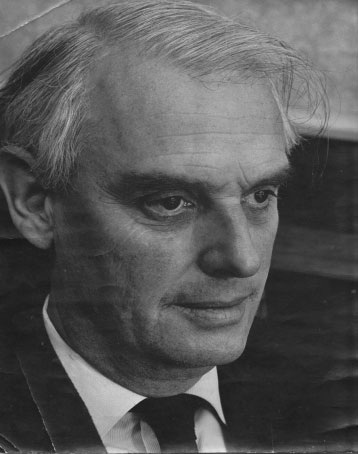
Alec Peterson is seen as ‘the father of the International Baccalaureate’ and a leading pioneer of international education in Britain and beyond.
Born in Edinburgh to John Carlos Kennedy Peterson of the Indian Civil Service in Bengal and his wife Flora (née Campbell), he and his brothers were brought up by relations in the home country while the parents were abroad. He attended Radley and Balliol where he read Greats (Classics). He went on to teach at Shrewsbury School and became Head of Dover College. With the advent of war, he was recruited into the SOE, serving with distinction in South-East Asia and Malaysia, and was awarded an OBE.
His years overseas convinced him that an understanding of other cultures should become a key part of education in the post-war period. He also argued against the UK’s ‘arts-science divide’ and promoted the idea of an interdisciplinary approach to secondary education through books, articles, and broadcasts in the 1950s and 1960s. He became closely involved in setting up the United World Colleges movement. Atlantic College at St Donat’s in Wales became the first such college. Alec worked closely with Earl Mountbatten, who was the first president of UWC and with Charles, then Prince of Wales, as his successor and became second chairman of the International Board of Directors of United World Colleges. There are now 18 UWC schools and colleges across the globe, with national committees in over 140 countries.
As Director of the Oxford University Department of Education 1958–1973, he explored new ideas for international education, working from 1966 with a group of educationists centred in Geneva on creating the world-wide curriculum and exam system that became the International Baccalaureate. He became first Director General of the IBO from 1968–1977. Alec’s special contribution to the IB curriculum included a course on Theory of Knowledge, designed to help students gain greater awareness of personal, ideological, and cultural assumptions. Since his death in 1988 the IB has become a world-wide examination system, now offered across over 5900 schools in over 160 countries.
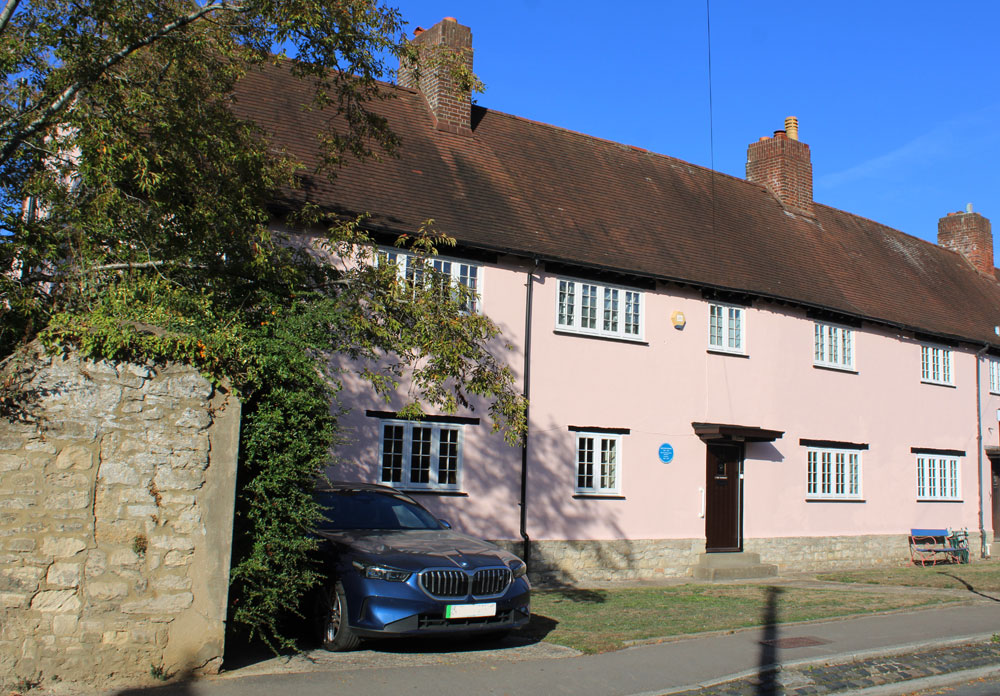
Alec Peterson lived at 33 St Andrew’s Road, Old Headington, Oxford from 1958–1973 while he was Director of Oxford University’s Department of Education. He acted as the Liberal Party’s spokesman on education when the party was led by Jo Grimond and also stood as the Liberal candidate for Oxford in 1966.
Memoir written by the Peterson family about their life in Headington
Sources:
- Oxford Dictionary of National Biography, article by Michael Brock
- Family information
- United World Colleges website
- Schools Across Frontiers: The Story of the International Baccalaureate and the United World Colleges, by A.D.C. Peterson (Open Court Publishing, 1987, re-published 2003, 2011)
- International Baccalaureate Office website, especially the page about Alec Peterson
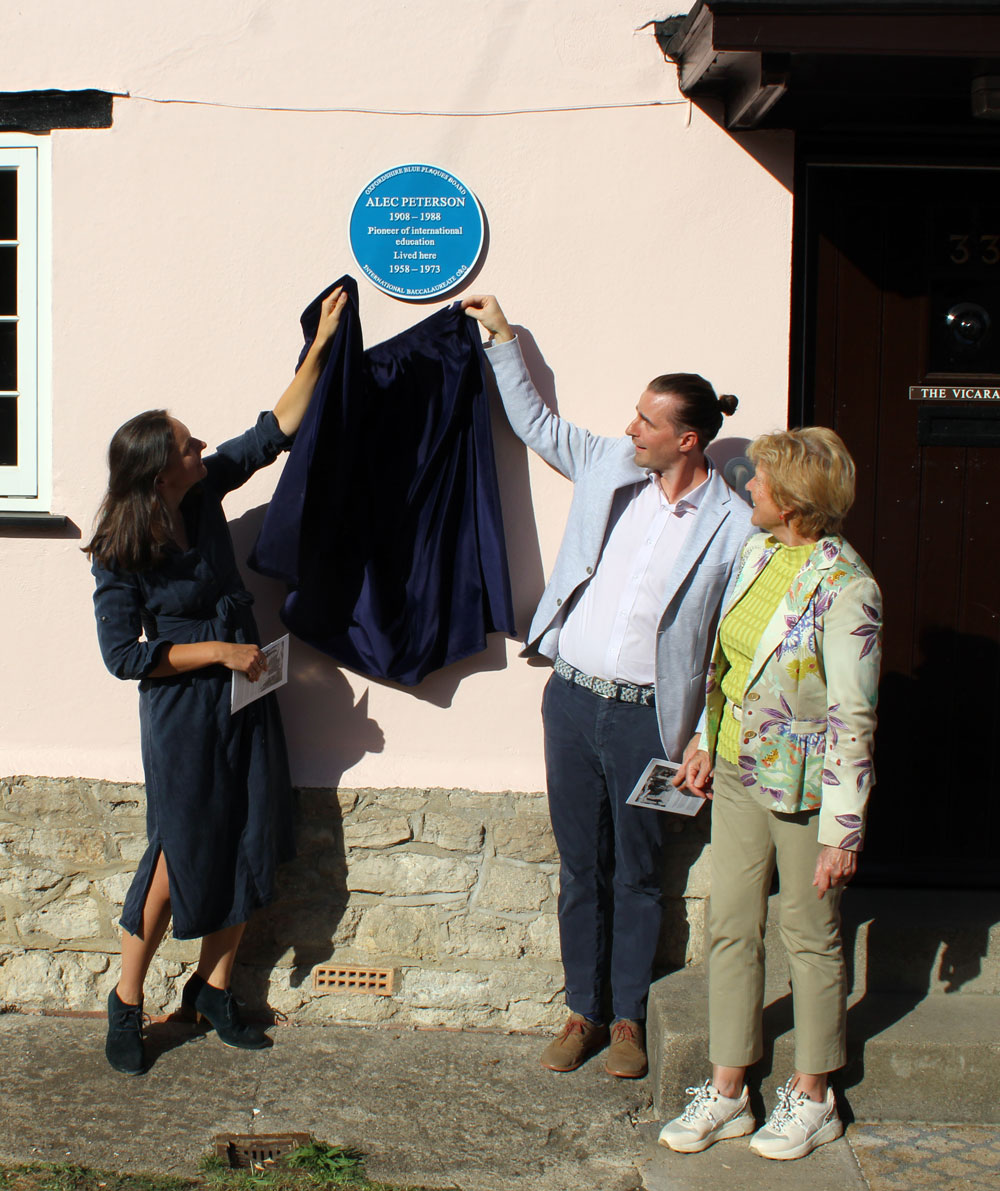
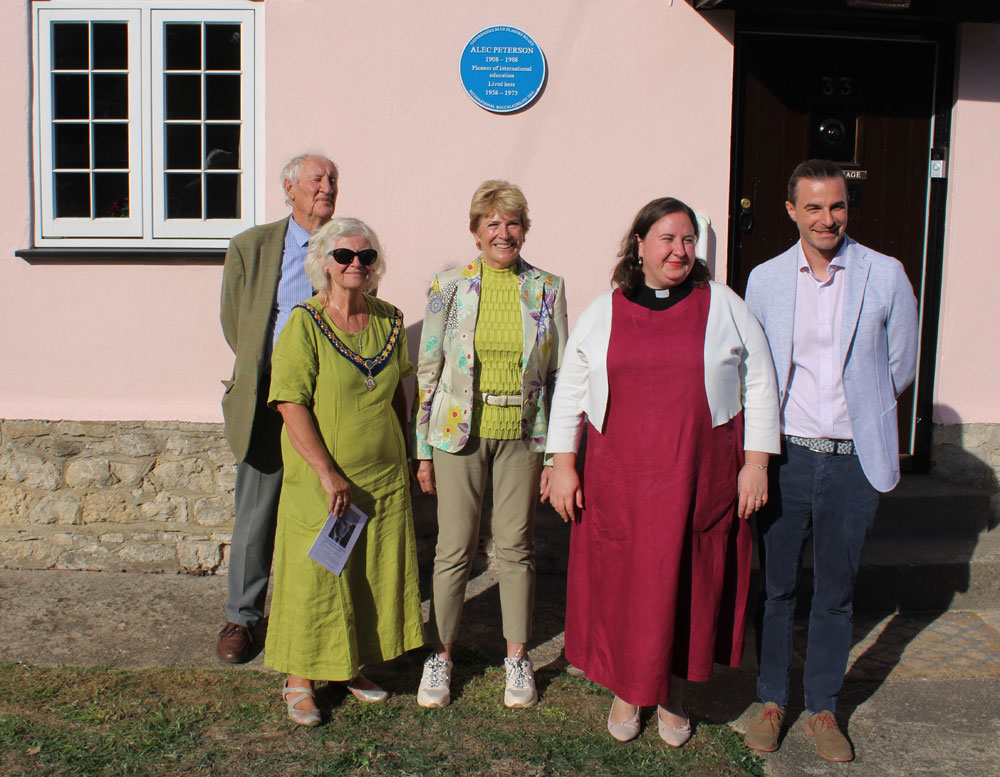
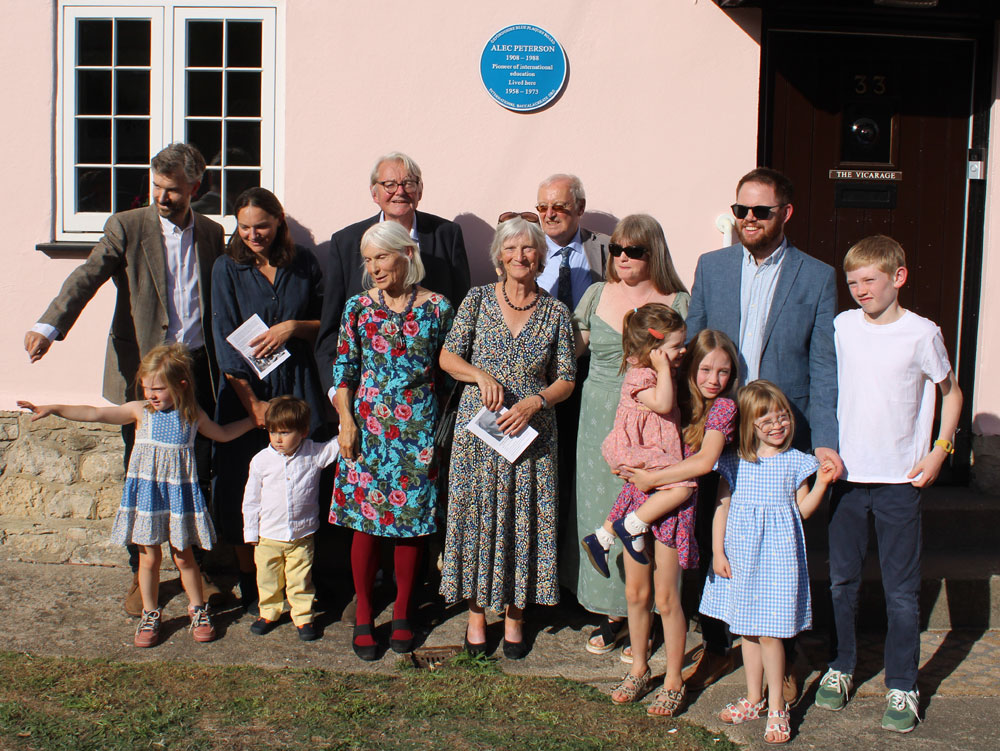
The plaque was unveiled at 33 St Andrew’s Road, now the vicarage, on 26 September 2026. The speakers were Dr Amelia Peterson, granddaughter, Ruth Rawling, Vice Chair of Governors, Atlantic College, Wales, and Marco Dondi, Deputy Director General of the International Baccalaureate Organisation. Among those attending were Cllr Roz Smith, Vice Chair of Oxfordshire CC, Henry and William Peterson, sons, Mrs Cassie Nash, daughter, and many members of the extended family, Revd Mthr Emma Hopegood Jones, friends, and neighbours.
Photographs taken at the unveiling ceremony:
- The three speakers unveiling the plaque (Ruth Rawling, Marco Dondi, and Amelia Peterson)
- Other guests with two of the speakers (Andrew Maclehose of Atlantic College, Cllr Roz Smith, Amelia Peterson, Mthr Emma Hopegood Jones, and Marco Dondi)
- Children, grandchildren, and great-grandchildren of Alec Peterson outside the house
Speeches made at the ceremony:
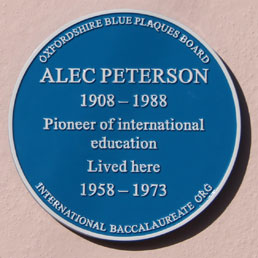
Oxfordshire Blue Plaques Board
ALEC PETERSON
1908–1988
Pioneer of international
education
Lived here
1958–1973
International Baccalaureate Org