Beatrice Mary BLACKWOOD (1889–1975)
Anthropologist, museum curator
45 Walton Street, Oxford
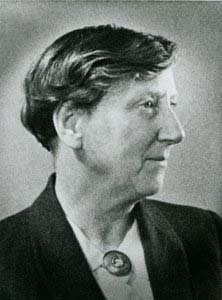
Beatrice Mary Blackwood was born in 1889 in Marylebone to James Blackwood, publisher, and his wife Mary (née Chamberlayne), a nurse. She attended Maida Vale High School and won a scholarship to Somerville where she read English 1908–1912. Subsequently she took a Diploma in Anthropology with distinction and was first employed in the Human Anatomy Department of the Radcliffe Infirmary in Oxford, becoming Departmental Demonstrator in 1920, and taking a BSc degree in 1923.
Her career as a pioneering anthropologist began in 1924 when she was awarded a Rockefeller Fellowship to undertake field research in North American communities over three years. In 1929 she set out on an adventurous field trip lasting 18 months, mainly based in the Northern Solomon Islands, on Buka and Bougainville. She studied every aspect of local life and built up a large collection of objects, over 400 of which were donated to the Pitt Rivers Museum. In 1935 she published the seminal text Both Sides of Buka Passage. In 1936 after transferring to the Pitt Rivers Museum in Oxford as University Demonstrator in Ethnology, she undertook a second field trip to Melanesia, travelling under the auspices of the museum to gather material for the collections. She worked in New Guinea and New Britain for nearly 18 months. As a result of this trip well over 2,000 objects were accessioned into the collections at the Pitt Rivers Museum. In 1943 she was awarded the Rivers Memorial Medal of the Royal Anthropological Institute for her exemplary field work.
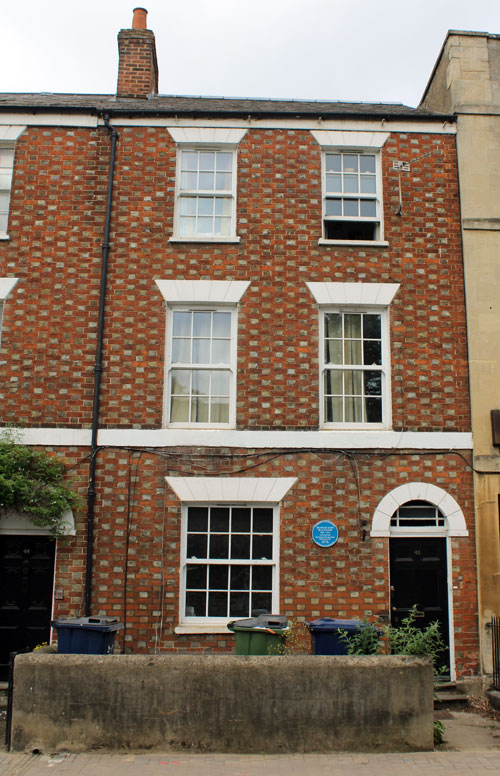
45 Walton Street, the home of Beatrice Blackwood from 1930 to 1962
In 1939 on the death of Henry Balfour, Curator of the Pitt Rivers, Beatrice Blackwood became a mainstay of the museum together with her friend and colleague Tom Penniman, the Museum’s second Curator. They began to systematize the Museum’s accession records, creating a card-catalogue with entries for every single object in the collection. Her powers of recollection were legendary. At the request of visiting researchers, she was to publish in 1970 The Classification of Artefacts in the Pitt Rivers Museum which became a paradigm for other museums.
Appointed Lecturer in Ethnology in 1946, she taught anthropology and archaeology to generations of Oxford students and dealt with hundreds of enquiries from researchers and the public. She travelled extensively and corresponded with friends and colleagues throughout the world. She was a member of the Folklore Society Council and the Council for British Archaeology. She became a Fellow of the Society of Antiquaries in 1948, and served as Vice-President of the Royal Anthropological Institute. After retirement in 1959, she still worked regularly at the museum and was made an honorary curator in 1965. She died in 1975.
Sources:
- Pitt Rivers Museum website
- Oxford Dictionary of National Biography, article by Chantal Knowles
- Intrepid Women, Adventures in Anthropology, edited by Julia Nicholson.
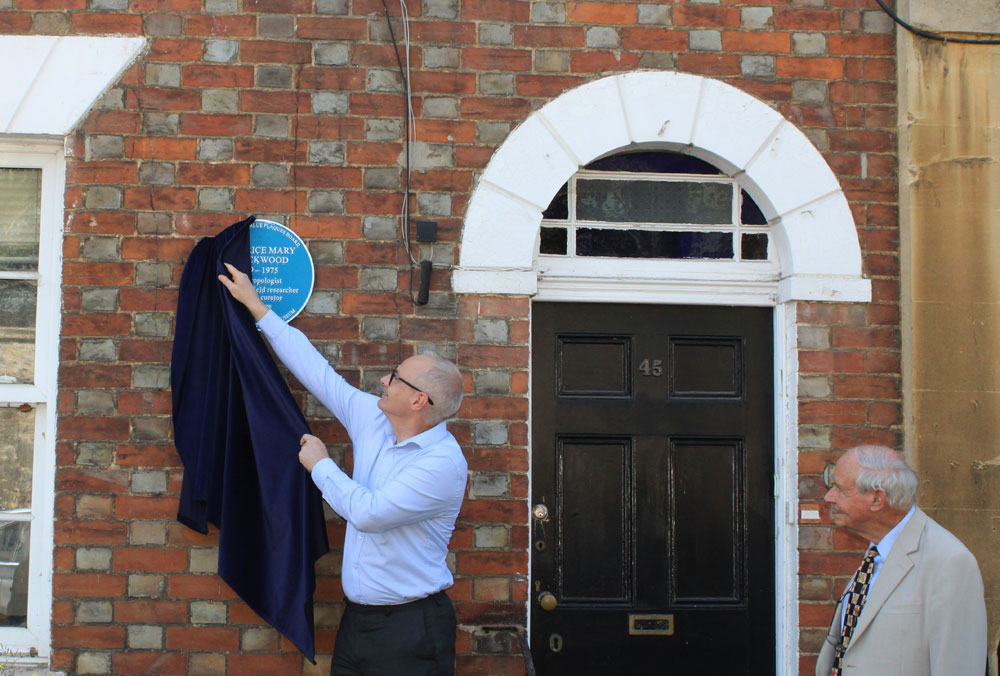
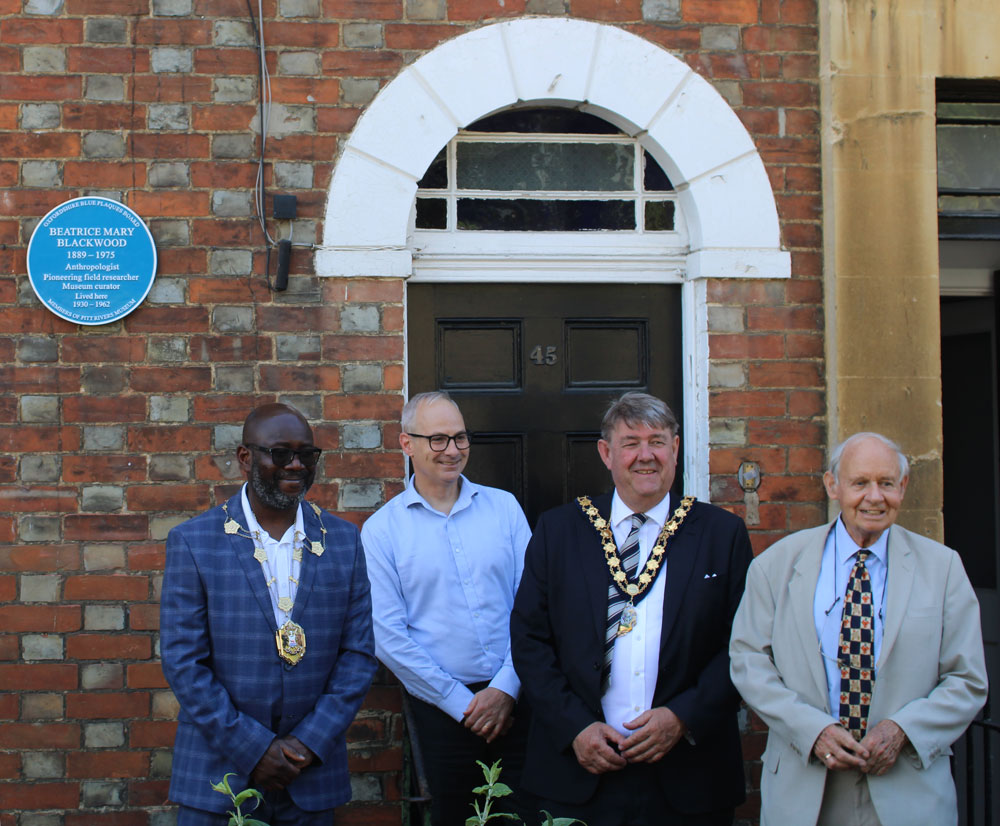
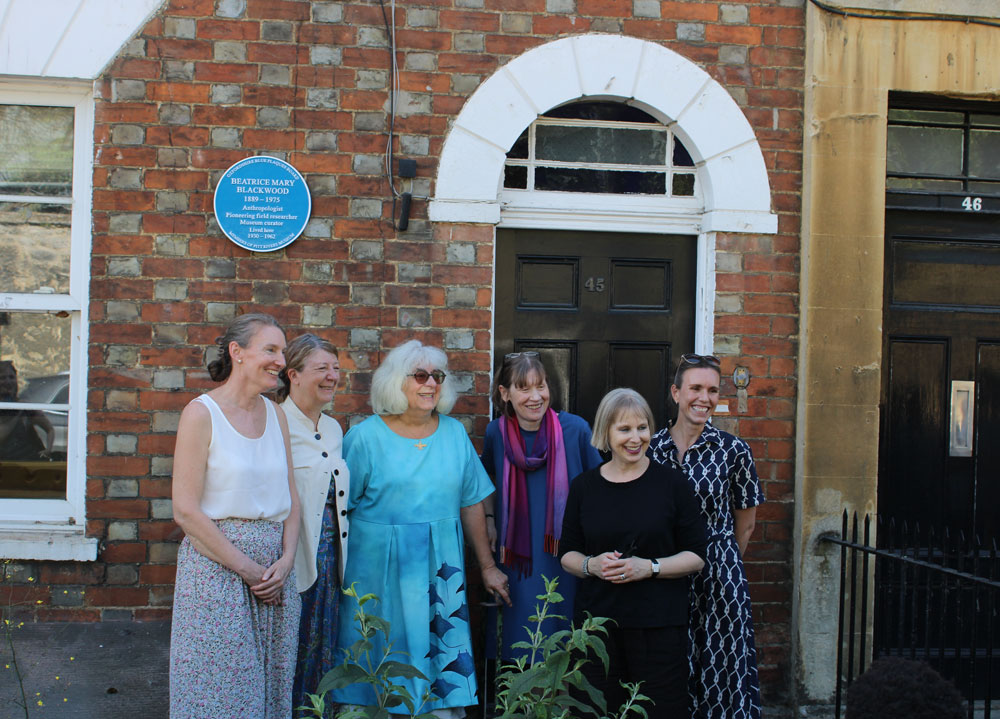
The plaque was unveiled at 45 Walton Street on 29 May 2026 by Professor Christopher Morton, Acting Director of the Pitt Rivers Museum. The gathering included Cllr Chewe Munkonge, Lord Mayor of Oxford, Cllr Ted Fenton, Chair of Oxfordshire County Council, trustees, staff and members of The Pitt Rivers, and Sir Hugo Brunner, co-founder of the Oxfordshire Blue Plaques scheme. This was the 150th plaque erected under the scheme.
Speech made by Professor Christopher Morton at the unveiling ceremony
Photographs taken at the unveiling ceremony:
- Professor Christopher Morton unveiling the plaque
- Chewe Munkonge (Lord Mayor of Oxford), Professor Christopher Morton,
Councillor Ted Fenton (Chair of Oxfordshire County Council),
and Professor Robert Evans (Chair of the Oxfordshire Blue Plaques Board) - Representatives from the Pitt Rivers Museum
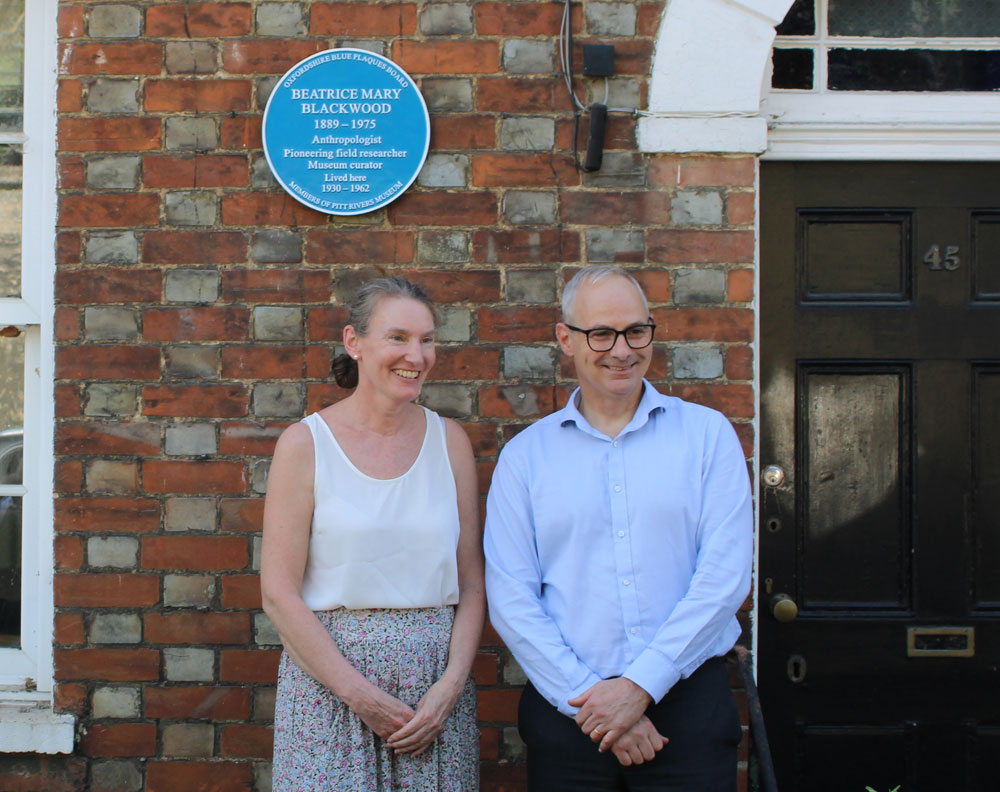
- Beth Joynson, Executive Assistant at the Pitt Rivers Museum, and Christopher Morton
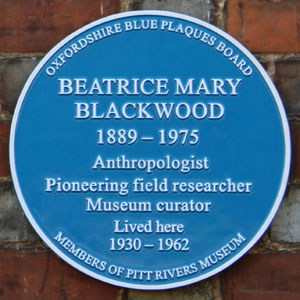
Oxfordshire Blue Plaques Board
BEATRICE MARY
BLACKWOOD
1889–1975
Anthropologist
Pioneering field researcher
Museum curator
Lived here
1930–1962
Members of Pitt Rivers Museum