Herbert PAYNE (1880–1922)
Campaigner for first council housing
71 Queens Road, Banbury
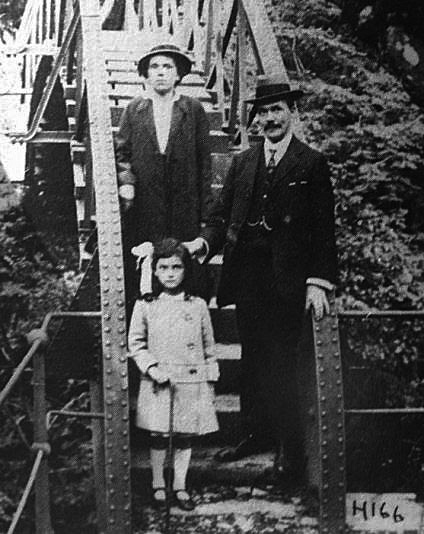
Herbert Payne was the driving force behind the creation of Oxfordshire’s first council houses, 40 of them in Kings Road, Banbury, built in 1913. He constantly pushed for these in the teeth of an establishment that resisted the idea that public money could be spent on social housing provision.
He came to Banbury from Uppingham in about 1901, first working at Mawles’ ironmongers in the Market Place. Dismissed for talking politics in the shop, he set himself up as a commercial traveller, selling cutlery.
Right: Herbert Payne with his wife Florence
and
their daughter
Kathleen,
who was born
in 1910.
Photograph copied (with
permission
of the author)
from John
Hodgkins,
Over the
Fields to Glory
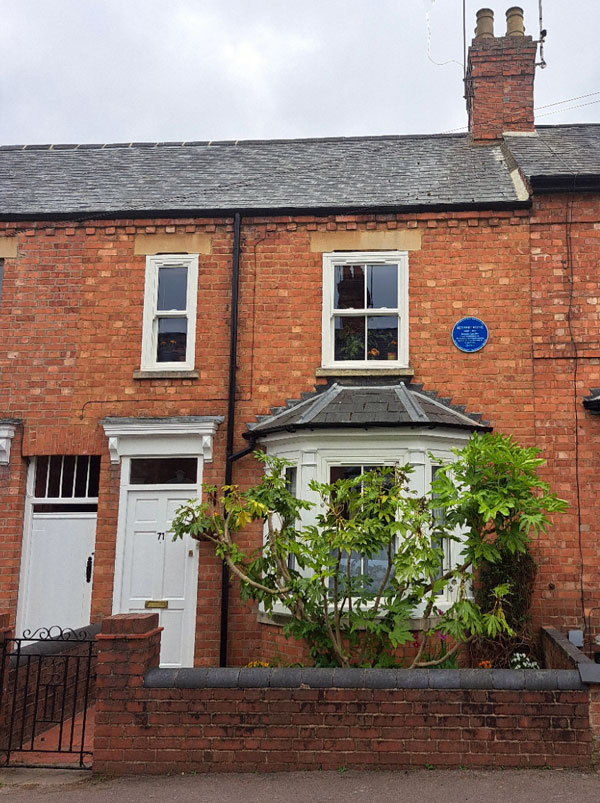
Payne lived in a terraced house at 71 Queen Street, now Queens Road (left), later moving to Marston House, 37 Bridge Street, his business premises.
A Banbury branch of the Independent Labour Party (ILP) was formed in 1906 and Herbert Payne was elected as one of two ILP councillors whose purpose was to focus on the issue of social housing.
Rents for workmen’s dwellings in Banbury ranged from two to six shillings a week. The cheaper ones were mostly unfit for habitation – some had no backs and many were overcrowded – and the higher rents were unaffordable. The Medical Officer often stated that he would have condemned more houses had there been any alternative housing. Councillors did not want to increase the rates and some were landlords worried that a supply of social housing would reduce their rental income.
Payne was a radical thinker: he was a congregationalist, pacifist, teetotaller, and vegetarian. A great speaker with a resonant voice, he was called “the Cow Fair Roarer”. In February 1907 he demanded the Council appoint a Housing Investigation Committee to enquire into the existing supply of dwellings for local working people. He requested that it look into the work of other councils (outside Oxfordshire) under the Housing of the Working Classes Act 1890. Payne kept up the pressure inside the Council chamber and agitated outside it. In Boxhedge Square in Neithrop, an area notorious for its squalor, stench, and unruliness, Payne roared to a large crowd about “the rotten and bad houses with foul drains, leaky roofs, small windows and dirty walls … only inhabited because the people had nothing better to go to”.
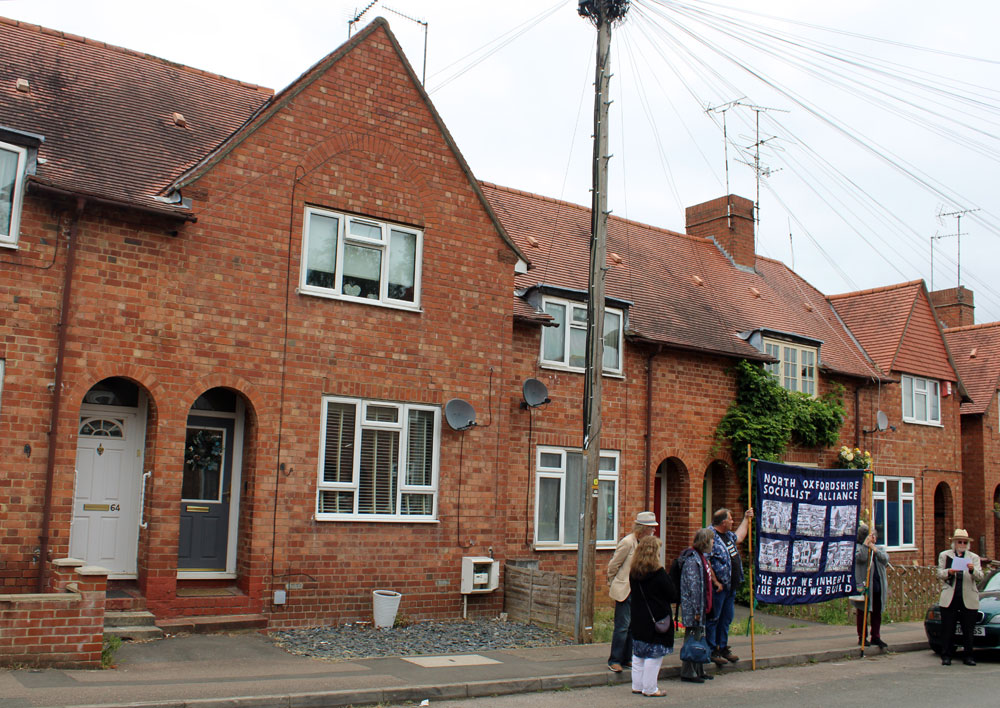
Payne’s campaign was supported by the local Co-operative movement and railway men who had to wait months before they could bring their families to the town because of the housing problem. Local businesses added their own pressure: some firms had declined to set up in Banbury because of the lack of housing. In 1908 Payne drew attention to the campaign of Huddersfield and other councils for land-tax reform which would encourage landowners to sell land for housing. A visit was made to Newbury to view the recent initiative there. The Housing and Town Planning Act of 1909, combined with Payne’s tenacity, finally resulted in Banbury’s decision to build. The Council elections of November 1911 saw cross-party agreement that “housing has become the most pressing requirement of our town”. Payne’s long campaign had finally triumphed. Forty council houses were built in 1913 in Kings Road (below), named after the coronation of 1911.
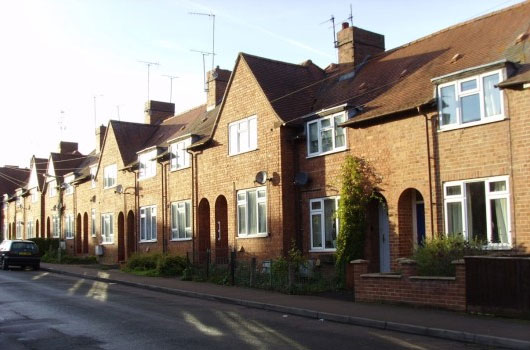
Herbert Payne served on Banbury Borough Council 1906–1917. He was a conscientious objector during WWI and imprisoned for his stance. He died at the age of 42 in the Warneford Hospital in Oxford and is buried in Banbury, in Southam Road Cemetery. An annual march in his honour, organized by the North Oxfordshire Socialist Alliance (NOSA), has been instituted in Banbury.
Sources:
- Jane Kilsby: Early Council Housing in Banbury, King’s Road and the Cow Fair Roarer (Municipal Dreams, 2016): Part I and Part II
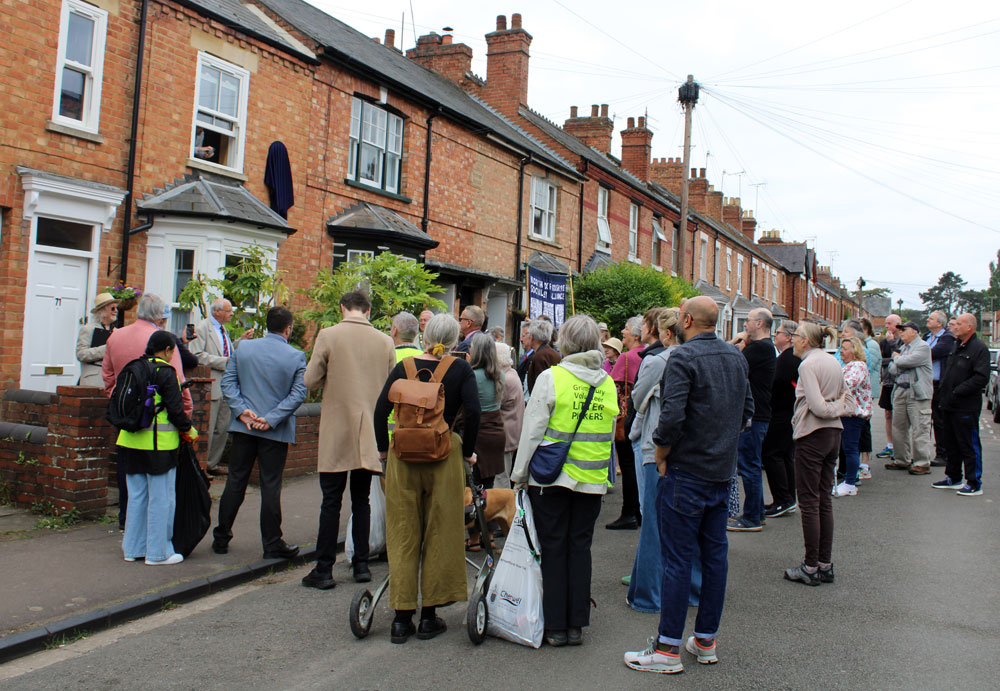
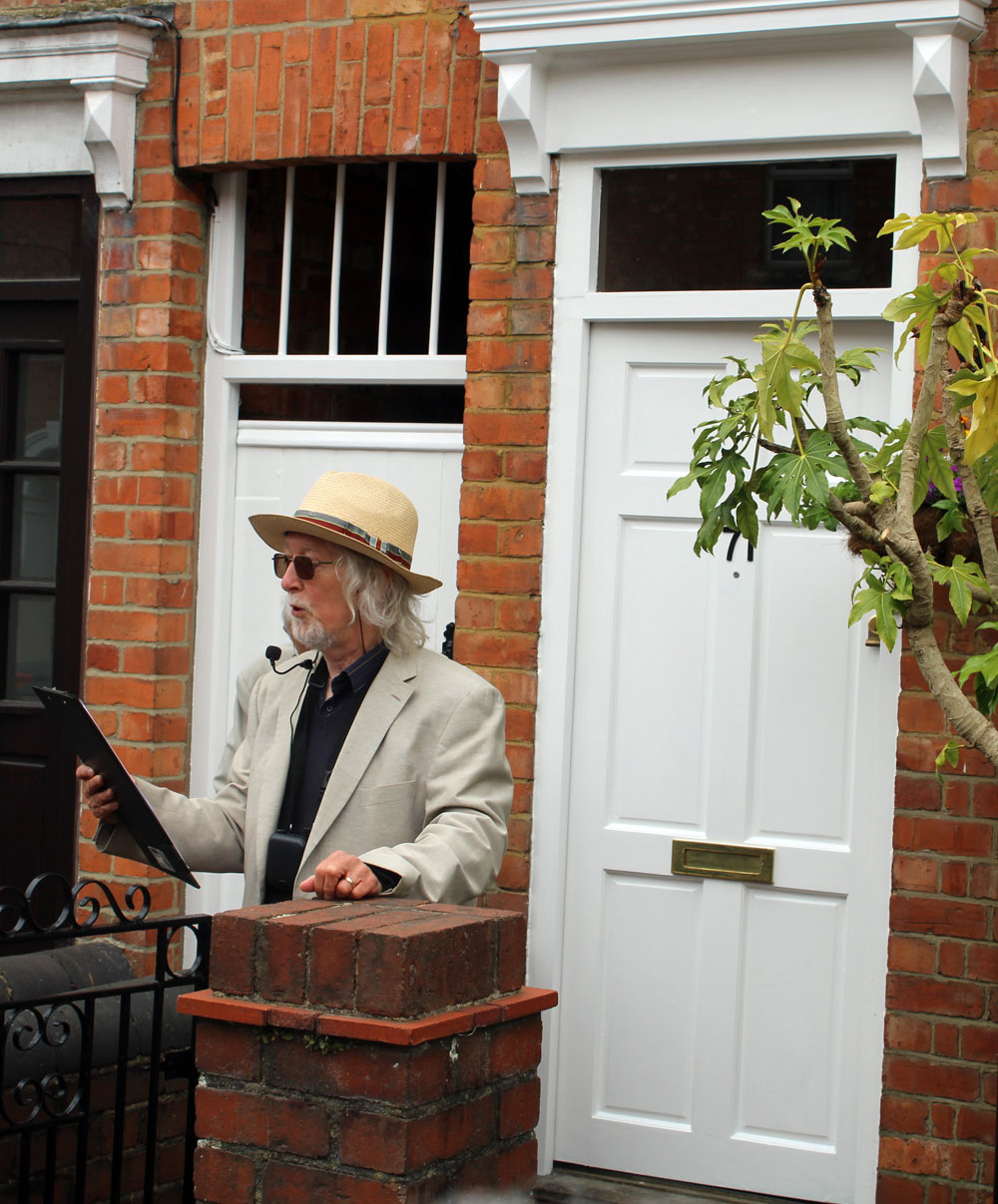
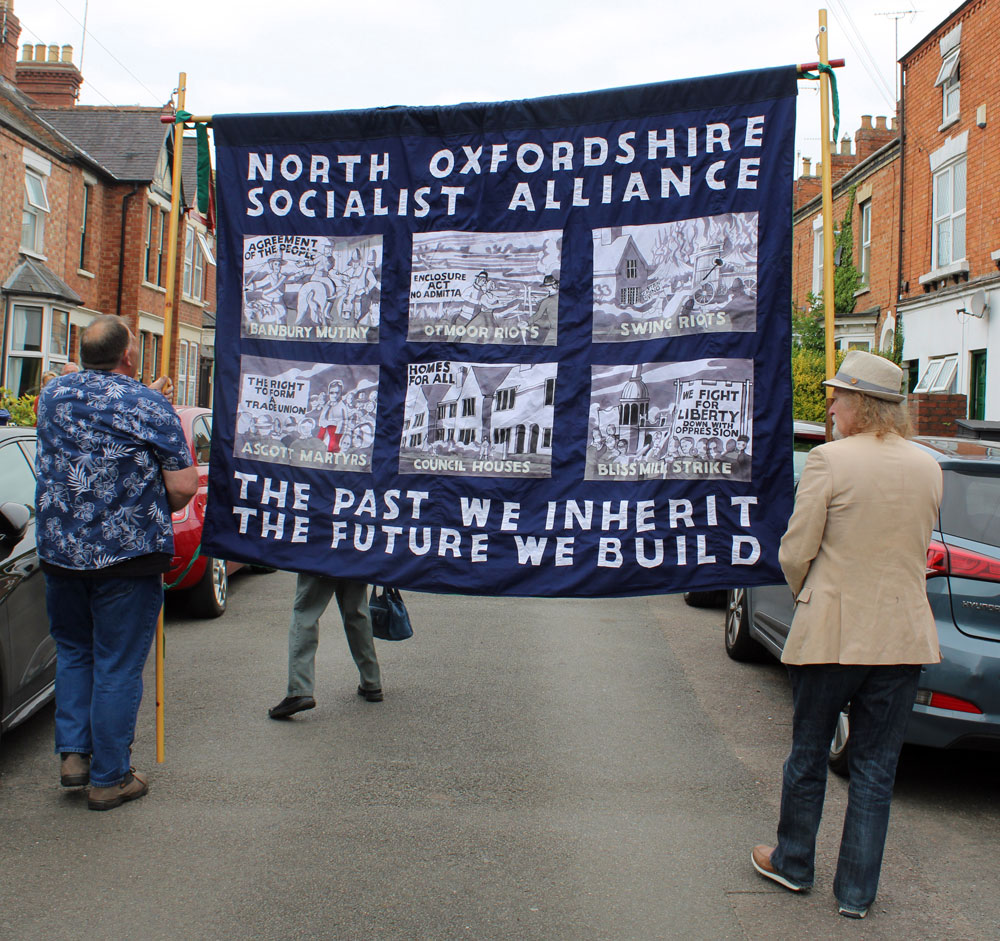
The plaque was unveiled at 71 Queens Road, Banbury on 17 May 2025. Steve Kilsby, former councillor, local historian, and fervent admirer, gave the tribute speech. Among those attending were Sir Tony Baldry, High Steward of Banbury, Sean Woodcock, MP for Banbury, Banbury Town and Cherwell DC Councillors, the Chair of Banbury Civic Society and local residents. NOSA paraded a banner celebrating Herbert Payne.
Photographs taken at the ceremony:
- Professor Robert Evans, Chair of the Oxfordshire Blue Plaques Board,
delivering the introductory speech - Steve Kilsby delivering the tribute speech
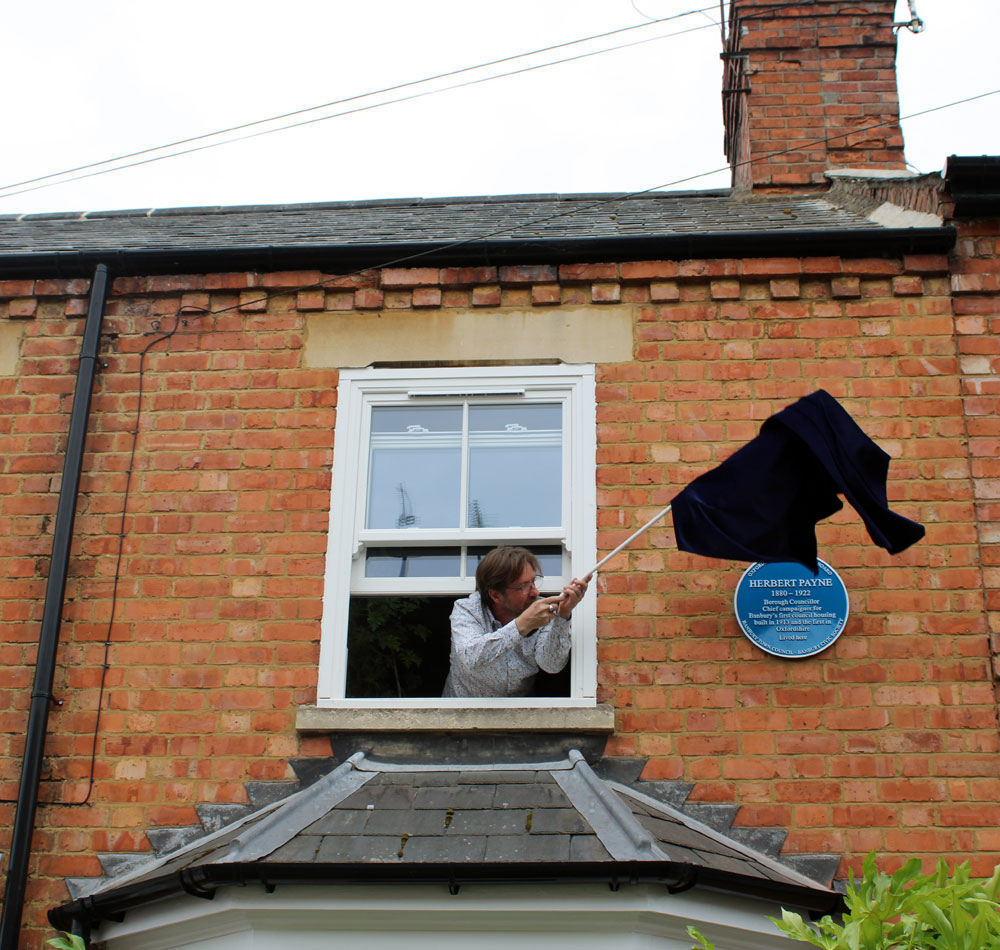
- The moment of unveiling
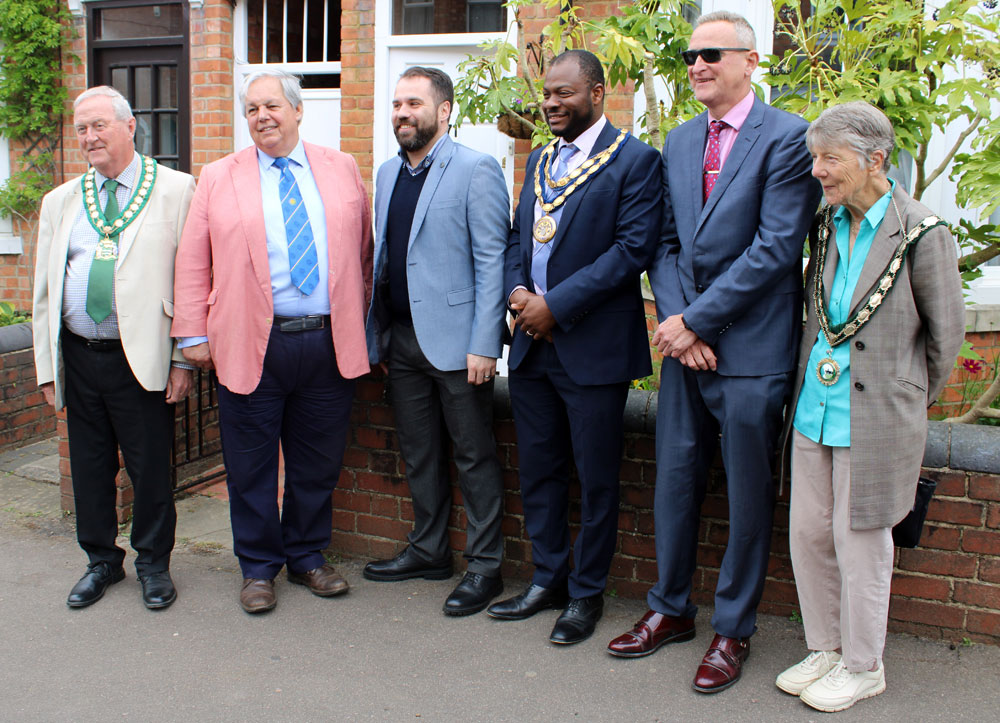
- Dignitaries present at the ceremony: Sean Woodcock, MP for Banbury; Sir Tony Baldry, High Steward of Banbury (and Banbury MP 1983–2015); Chukwudi Okeke, Chairman of Cherwell District Council; and representatives from the Oxfordshire Blue Plaques Board
- North Oxfordshire Socialist Alliance with their banner (which depicts Payne's Kings Road council houses in the middle image on the lower row):
marching up Queens Road
outside some of the council houses built in Kings Road in 1913
Speech delivered at the ceremony by Steve Kilsby (PDF)

Oxfordshire Blue Plaques Board
HERBERT PAYNE
1880–1922
Borough Councillor
Chief campaigner for
Banbury's first council housing
built in 1913 and the first in
Oxfordshire
Lived here
Banbury Town Council – Banbury Civic Society