Sir Muirhead BONE (1876–1953)
Artist, printmaker
Grayflete, Vernon Avenue, Harcourt Hill, Oxford
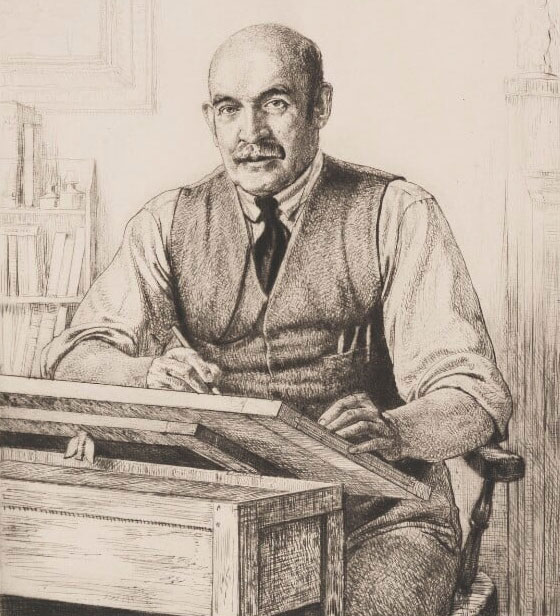
Muirhead Bone by Francis Dodd, 1931 (NPG 3079)
Muirhead Bone was born in Partick, Glasgow to David Drummond Bone, a journalist, and his wife Elizabeth (née Crawford). Apprenticed as an architect’s draughtsman at age fourteen, he then attended the Glasgow School of Art and in 1898 began to make prints, specialising in etchings and drypoints. His predilection was for complex architectural landscapes showing construction and demolition and grandiose structures such as Gothic cathedrals. He was destined to become one of the greatest British printmakers and an influential public figure.
In 1901 he moved to London, becoming a member of the New English Art Club and exhibiting there as well as at the Glasgow Art Club. By 1903 he was sufficiently prosperous to marry Gertrude Dodd to whom he had been engaged for five years and they set up house in Chiswick. He became founder member and secretary to the Society of Twelve dedicated to promoting prints and drawings. Among the members were Augustus John and Edward Gordon-Craig. Examples of his work in this phase are The Great Gantry, Charing Cross Station (1906) and Ayr Prison (1905).
With the advent of the First World War, he lobbied for the creation of an Official War Artists scheme and in 1916 was duly appointed as the first British War Artist, arriving in France during the Battle of the Somme in August. By October he had produced 150 black and white drawings for the war office. On returning home he produced six lithographs of the Clyde shipyards to illustrate the publication Britain’s Efforts and Ideals. Two volumes of Bone’s war drawings were published during the war: The Western Front and With the Grand Fleet. He became a member of the British War Memorials Committee and was the moving spirit behind the creation of the Imperial War Museum, donating 400 of his own works and setting up the Muirhead Bone Fund to purchase works for it, using proceeds of £2000 from the sale of reproductions of his own works. He was very generous in his aid to and promotion of other artists. Kenneth Clark described him as one of the most honest, warm-hearted, and unselfish men he had ever known.
Subsequent travels in Europe inspired new work and he exhibited extensively in London and New York. He was knighted in 1937 and at various times was a trustee of the Tate, the National Gallery, and the Imperial War Museum. In WWII he again undertook salaried work for the Admiralty, portraying coastal installations and evacuated troops and officers. A striking and enormous drawing done during the Blitz is St Bride’s and the City after the Fire, dated 29 December 1940. Between 1906 and 1951 he contributed to the pictorial record of Oxford when his drawings and watercolours adorned the annual Oxford Almanack on fifteen occasions.
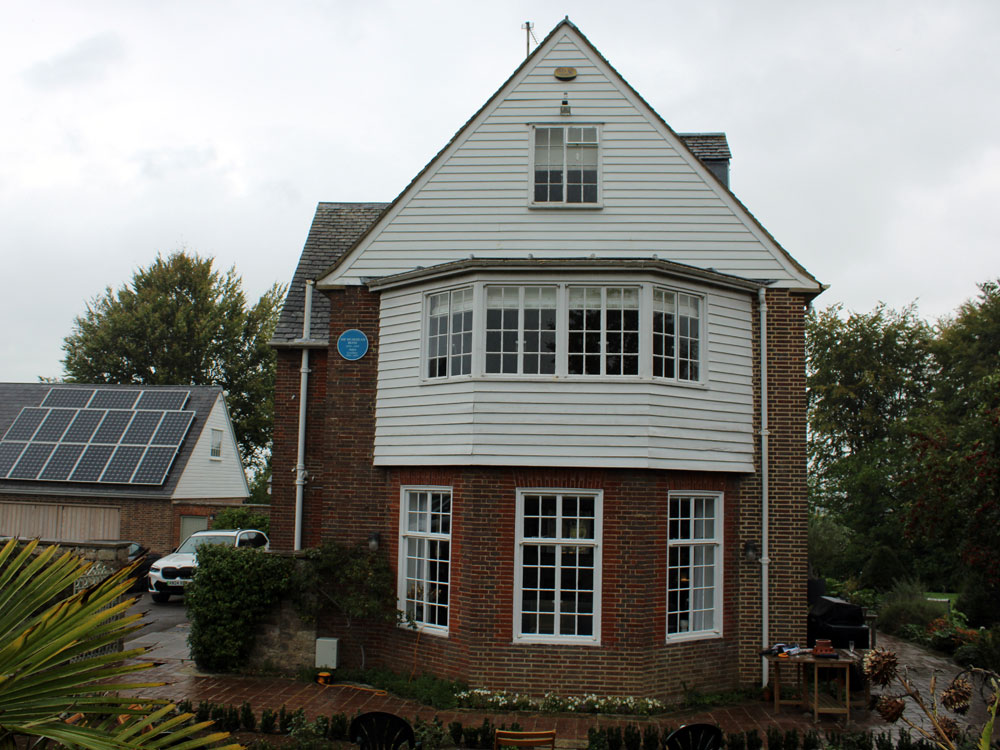
In 1931 he designed and built Grayflete (above), a house on Harcourt Hill, Oxford with a view of the dreaming spires. He lived there until his death in 1953. He was buried in Cheshire next to St Mary’s Church, Whitegate, near Northwich. He was honoured for his public service with a memorial stone in St Paul’s Cathedral.
Altogether he had made 478 etchings and drypoints, a number of lithographs, and thousands of drawings and watercolours. The most important collections are held by the British Museum, the Hunterian Gallery in Glasgow, the Imperial War Museum and the Tate Gallery. The Oxford prints can be viewed in the Western Art Print Room at the Ashmolean.
Sources:
- The Oxford Dictionary of National Biography, article by Gordon Cook
- Manchester Guardian obituary (23 October 1953)
- Images of the prints can be found on the web.
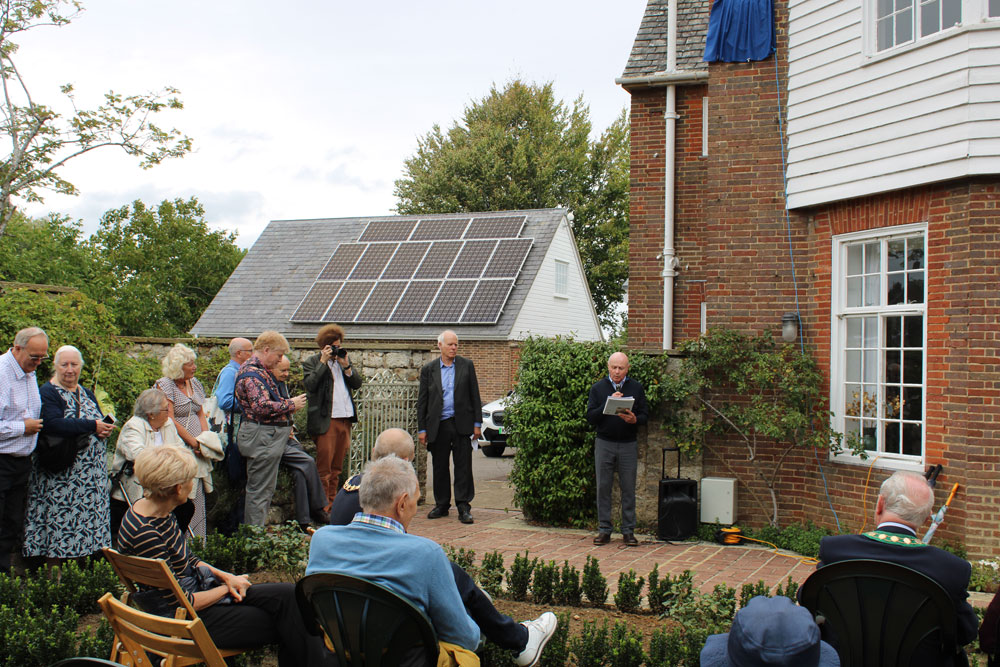
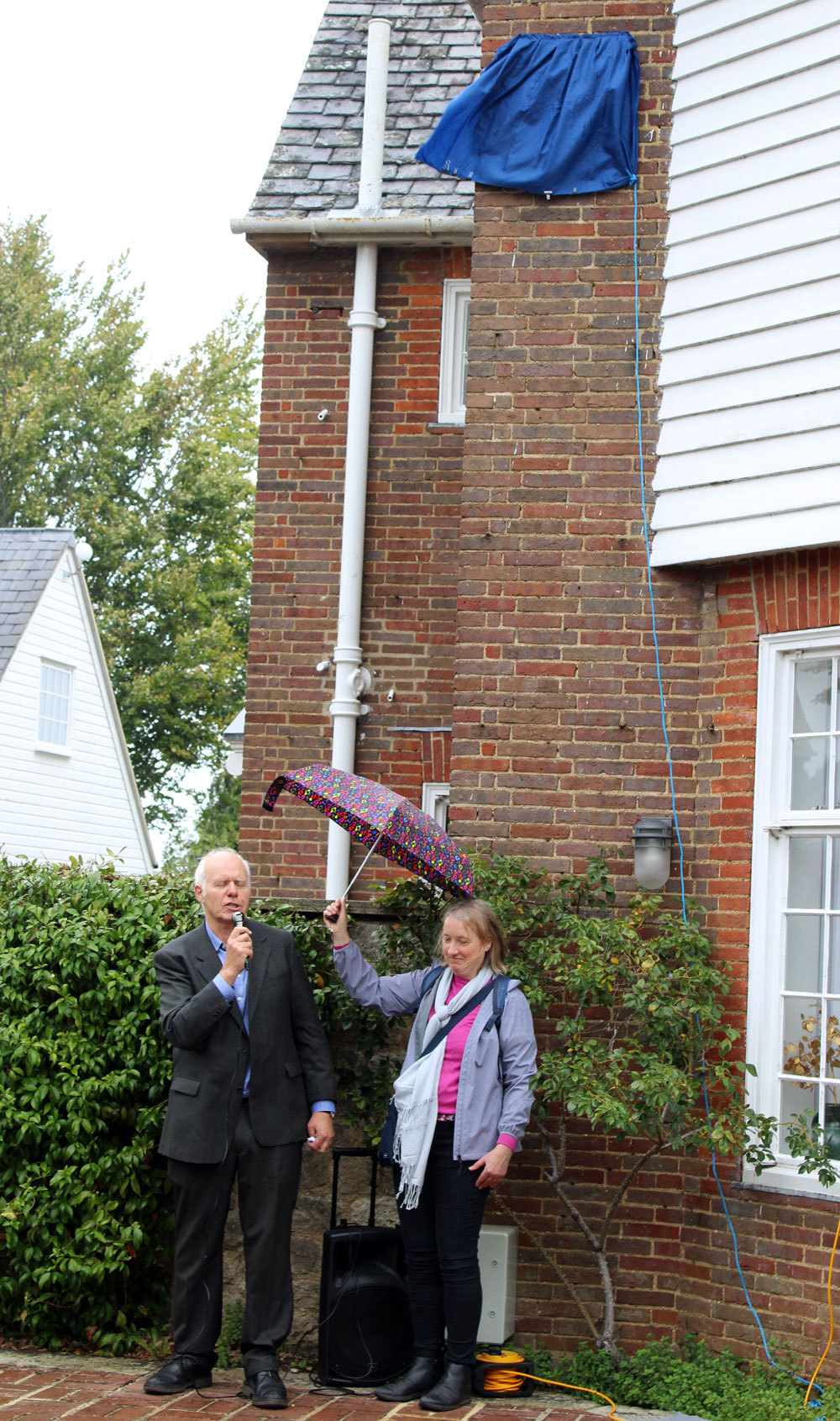
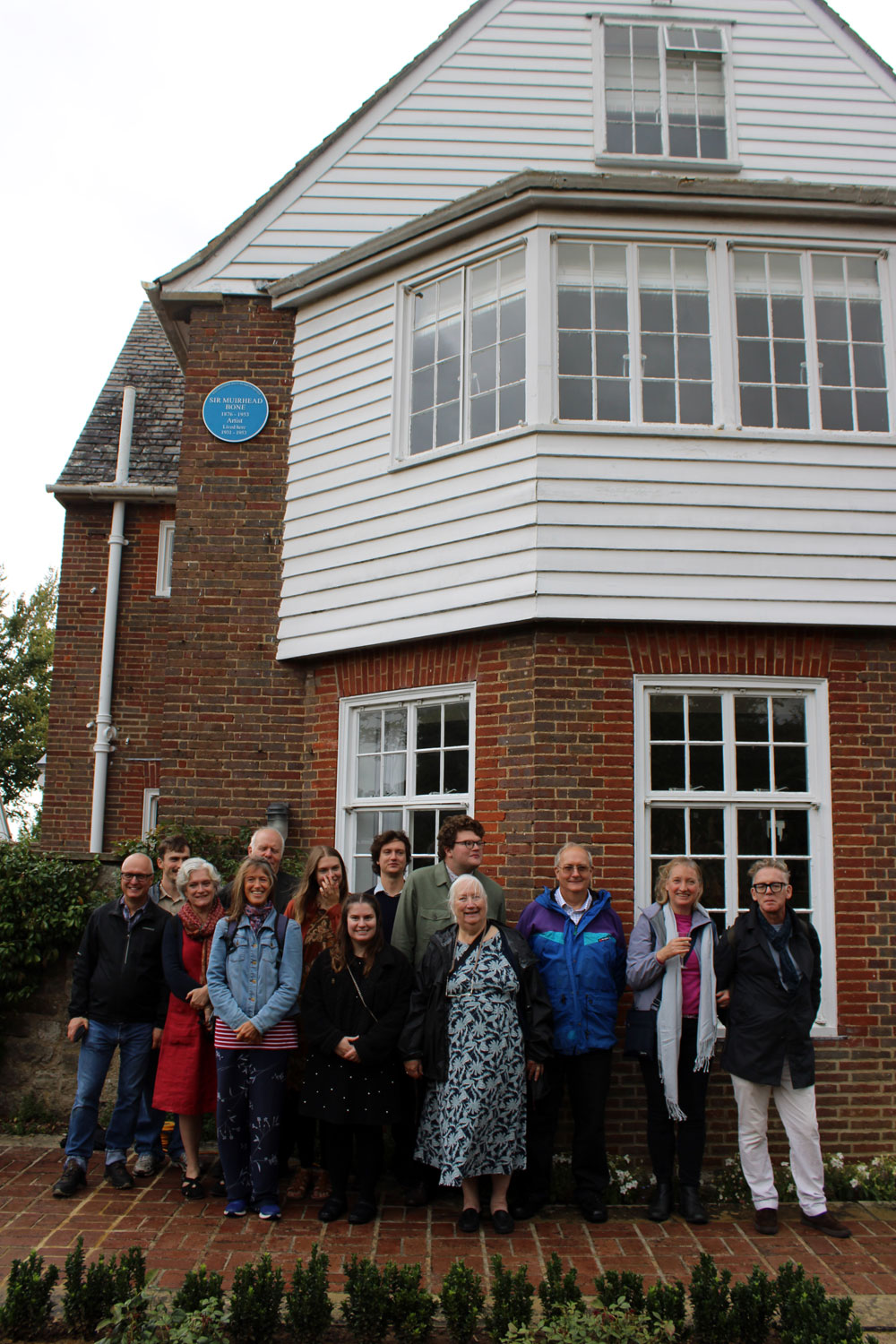
The plaque was unveiled at Grayflete on 20 September 2025. The speaker was collector Dr Harry Dickinson of the Ashmolean Print Room. Among those attending were Cllr Mark Lygo, Chair of Oxfordshire CC, descendants of Sir Muirhead Bone, members of Oxfordshire Blue Plaques Board, and local residents.
Photographs taken at the unveiling ceremony:
- Dr Harry Dickinson delivering his speech
- Oliver Bone, great-grandson of Sir Muirhead, delivering his speech
- Descendants of Sir Muirhead Bone with the plaque
Speeches made at the ceremony (PDF):
- Speech made by Oliver Bone
- Speech made by Harry Dickinson (with a note on the house and its architect and a list of Oxford Almanacks illustrated by Muirhead Bone at the end)
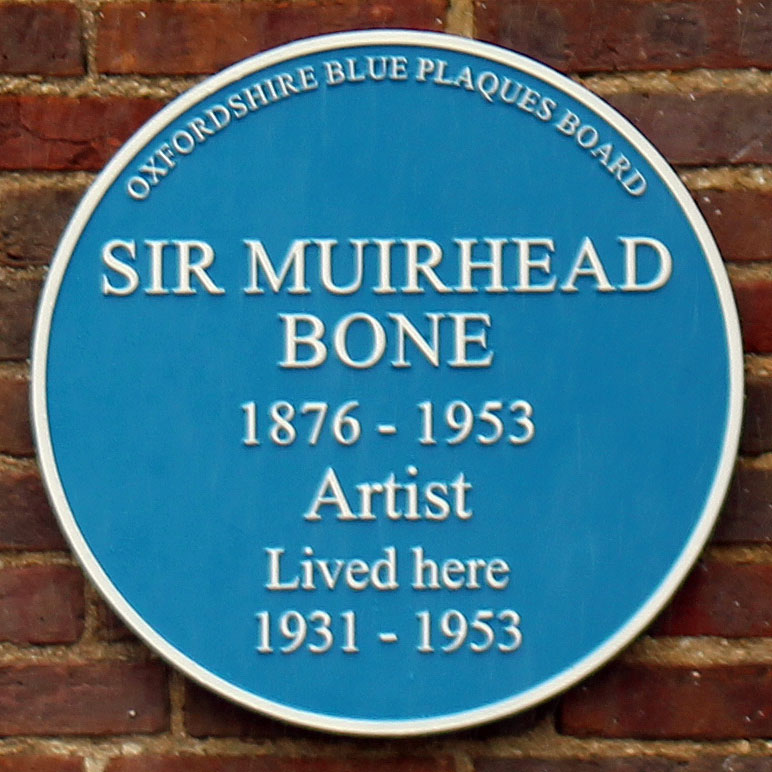
Oxfordshire Blue Plaques Board
SIR MUIRHEAD
BONE
1876–1953
Artist
Lived here
1931–1953